
Annual Meeting of the Priority Programme “Autonomous Processes in Particle Technology”
SPP 2364
Wednesday, October 07, 2026, 12:00 - Friday, October 09, 2026, 16:00
Novotel
DFG Priority Programme · SPP 2364
5th Annual Meeting & PhD Workshop
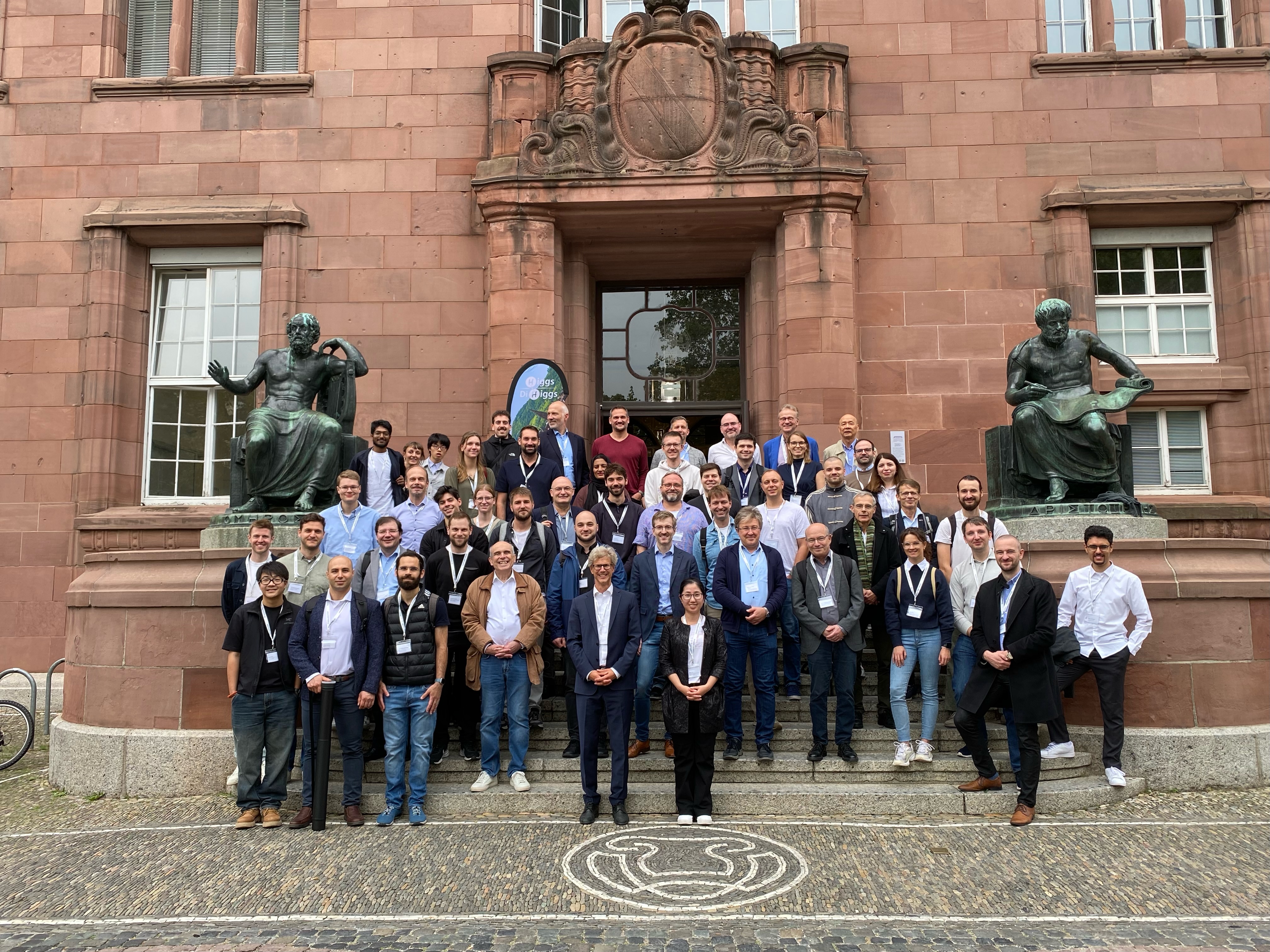
We warmly welcome invited guests and members of SPP 2364 to Freiburg for the 5th Annual Meeting, followed by the PhD Workshop.
Date: 7–9 October 2026 Location: Freiburg im Breisgau Venue: Novotel Freiburg am Konzerthaus
Welcome to the 5th Annual Meeting of SPP 2364 and the accompanying PhD Workshop, taking place in Freiburg from 7–9 October 2026.
PDF slides for the plenary talk by Richard D. Braatz.
PharmaPy workshop materials.
From Crystal to Tablet: AI-Driven Digital Design and Optimization of End-to-End Pharmaceutical Manufacturing by Zoltan K. Nagy.
The event brings together the members and invited guests of SPP 2364 to exchange recent developments and results from across the Priority Programme. The programme combines short project spotlight presentations with extended poster sessions, providing ample opportunity for scientific discussion and exchange. A plenary lecture by Richard D. Braatz (MIT) and an invited talk by Zoltan K. Nagy (Purdue University) complement the contributions from the individual projects.
Following the Annual Meeting, the PhD Workshop on 8–9 October offers two dedicated sessions for the programme’s doctoral researchers. Zachary Hillman and Zoltan K. Nagy will lead a hands-on introduction to PharmaPy and digital process design, while Stefan Rogge (BadenCampus) will conduct a workshop on translating research into a startup and the practical aspects of founding a company in Germany.
Alongside the scientific programme, the meeting provides time for informal exchange, networking, and discussion among researchers from across SPP 2364.
We look forward to welcoming you to Freiburg!
Venue
Novotel Freiburg am Konzerthaus
Konrad-Adenauer-Platz 2
79098 Freiburg im Breisgau
Presentation Information
Each project will present a five-minute spotlight of their posters with three to five slides highlighting new results. Questions will be discussed during the following poster session, where each subproject presents its poster.
Presentations should preferably be given in English by PhD students or postdocs.
Program — 5th Annual Meeting
Wednesday, 7 October 2026 Annual Meeting
| 12.00–13.00 | Check-in and lunch |
| 13.00–13.30 | Introduction and short review of the fourth year |
| 13.30–13.35 | Autonomous control of a process chain for CO2 carbonation by use of mine waste PIs: Naim Bajcinca (RPTU Kaiserslautern), Marco Gleiß (KIT), Kai Sundmacher (OVGU Magdeburg) |
| 13.35–13.40 | Model-based process control for transferred arc synthesis of nanoparticles PIs: Steven Xianchun Ding (University of Duisburg–Essen), Frank Einar Kruis (University of Duisburg–Essen) |
| 13.40–13.45 | Synthesis of highly functional nanoparticles via a sol-gel process using X-ray scattering methods: from process development to process control PIs: Thomas Meurer (KIT), Hermann Nirschl (KIT) |
| 13.45–13.50 | Model-based control of the dynamics during fine grinding in wet-operated stirred media mills PIs: Christian Kirches (TU Braunschweig), Carsten Schilde (TU Braunschweig) |
| 13.50–15.15 | Poster Session Poster Session I |
| 15.15–15.45 | Coffee break |
| 15.45–16.15 | Walk from the hotel to the Aula |
| 16.15–17.30 | Plenary Modeling and Control of the Continuous Manufacturing of Biotherapeutic Nanoparticles Aula of the University of Freiburg, KG I |
| 18.30 | Dinner |
Thursday, 8 October 2026 Annual Meeting
| 9.00–9.05 | Welcoming |
| 9.05–9.10 | ARCO-CRYSTAL: Adaptive robust predictive control of continuous slug flow cooling crystallization PIs: Sergio Lucia Gil (TU Dortmund), Kerstin Wohlgemuth (HHU Düsseldorf) |
| 9.10–9.15 | Adaptive optimal control of continuous aqueous two-phase flotation (ATPF) PIs: Moritz Diehl (University of Freiburg), Hermann Nirschl (KIT) |
| 9.15–9.20 | Model-based process control for dynamic and efficient operation of liquid/liquid mixer-settler systems PIs: Steffi Knorn (TU Berlin), Matthias Kraume (TU Berlin) |
| 9.20–9.25 | Autonomous structure formation processes in spray fluidized bed agglomeration PIs: Andreas Bück (FAU Erlangen–Nürnberg), Achim Kienle (OVGU Magdeburg), Evangelos Tsotsas (OVGU Magdeburg) |
| 9.25–10.30 | Poster Session Poster Session II |
| 10.30–10.45 | Coffee break |
| 10.45–10.50 | Autonomous and self-adapting, high-resolution 3D additive manufacturing by high energy impacts of fine particles PIs: Sergiy Antonyuk (RPTU), Stefan Palis (TU Clausthal) |
| 10.50–10.55 | Model-based quality control in continuous manufacturing of pharmaceutical granules (QC4CM) PIs: Heike Vallery (RWTH Aachen), Stefan Klinken-Uth (HHU Düsseldorf) |
| 10.55–11.00 | Formulation of dispersed systems via (melt) emulsification: Process design, in situ diagnostics and regulation PIs: Knut Graichen (FAU Erlangen–Nürnberg), Franz Huber (FAU Erlangen–Nürnberg), Jochen Schmidt (FAU Erlangen–Nürnberg) |
| 11.00–11.05 | Model-based control of spray synthesis of structured granules with specified properties, using transfer functions derived by multivariate stochastic models and machine learning PIs: Urs Peuker (TU Bergakademie Freiberg), Volker Schmidt (Ulm University) |
| 11.05–12.15 | Poster Session Poster Session III |
| 12.15–13.00 | Talk From Crystal to Tablet: AI-Driven Digital Design and Optimization of End-to-End Pharmaceutical Manufacturing |
| 13.00–14.00 | Lunch |
| 14.00 | Departure of the PIs |
Program — 5th PhD Workshop
The PhD Workshop begins after the Annual Meeting on Thursday afternoon and continues on Friday, with two hands-on sessions focusing on digital process design and research entrepreneurship.
The Thursday workshop, led by Zoltan K. Nagy and Zachary Hillman (Purdue University), will introduce PharmaPy, an open-source Python framework for the modelling, simulation, and optimization of pharmaceutical and chemical manufacturing processes. The session will combine an introduction to the framework with practical exercises in process modelling and digital design.
Participants are asked to bring their own laptop for the hands-on session. PharmaPy and its source code are available on GitHub. The workshop files, including detailed instructions, can be downloaded here.
On Friday, Stefan Rogge (BadenCampus) will lead the workshop From Research to Startup – Founding in Germany, covering the transition from scientific research to entrepreneurship, including problem–solution fit, business models, funding and founding in Germany, and pitching.
Thursday, 8 October 2026 PhD Workshop
| 14.00–15.30 | Workshop Digital Design of Chemical Processes using PharmaPy |
| 15.30–16.00 | Coffee Break |
| 16.00–17.30 | Workshop Digital Design of Chemical Processes using PharmaPy |
| Evening | Evening at your leisure |
Friday, 9 October 2026 PhD Workshop
| 8.30–10.15 | Workshop From Research to Startup – Founding in Germany |
| 10.15–10.30 | Coffee break |
| 10.30–12.30 | Workshop From Research to Startup – Founding in Germany |
| 12.30–13.30 | Lunch |
| 13.30 | Departure |
Talks & Workshop Abstracts
Modeling and Control of the Continuous Manufacturing of Biotherapeutic Nanoparticles
Speaker: Richard D. Braatz (Massachusetts Institute of Technology)
This talk describes a new two-stage process for the automated, controlled continuous manufacturing of mRNA-loaded lipid nanoparticles. The talk begins with a summary of the commercial technologies for the manufacturing of these nanoparticles and their weaknesses in terms of mixing time scales. A two-stage process is defined which substantially improves micromixing while providing an additional variable for the control of the nanoparticle size and morphology. After demonstrating enhanced control including the use of Bayesian optimization, the talk concludes with progress in the building of mechanistic and machine learning-based models for the continuous manufacturing of lipid nanoparticles. While the experimental results are for mRNA-loaded lipid nanoparticles, the new process applied to the loading of any biotherapeutic molecule or macromolecular assembly, and the modeling and control methods are largely applicable to the manufacturing of other types of nano- and microparticles. This work is in collaboration with Profs. Allan Myerson and Bernhardt Trout at MIT.
From Crystal to Tablet: AI-Driven Digital Design and Optimization of End-to-End Pharmaceutical Manufacturing
Speaker: Zoltan K. Nagy (Purdue University)
Meeting the growing global demand for affordable, high-quality medicines requires more efficient, agile, and resilient pharmaceutical manufacturing. This presentation will highlight how artificial intelligence (AI), advanced modeling, and digital design technologies are transforming pharmaceutical process development, enabling accelerated optimization, scale-up, and end-to-end optimal (E2EO) manufacturing.
The talk will describe a framework for the AI-enabled digital design and scale-up of crystallization processes. Machine-learning workflows incorporating Bayesian optimization, active learning, synthetic data generation, uncertainty quantification, and surrogate modeling will be presented for rapidly developing fit-for-purpose digital twins when fully mechanistic models are impractical or prohibitively expensive. AI-driven, physics-inspired compartmental modeling approaches, such as CompArt, will also be introduced to efficiently capture complex hydrodynamics and scale-dependent mixing effects for process design and scale-up.
These concepts will be illustrated through case studies ranging from individual crystallization processes to integrated manufacturing systems. Examples will include the digital design and scale-up of industrial crystallization processes and the development of the E2EO MiniPharm, a modular and reconfigurable mini-manufacturing platform for the chemotherapy drug lomustine. Integration of manufacturing models with tablet dissolution and pharmacokinetic/pharmacodynamic (PK/PD) models will demonstrate how formulation and process design can be linked with dose-regimen optimization to support personalized medicine.
PharmaPy, an open-source modeling and simulation platform, will be presented as an enabling technology for the digital synthesis and optimization of hybrid batch–continuous and end-to-end pharmaceutical manufacturing processes, including distributed, modular, and mobile manufacturing approaches for more resilient and sustainable pharmaceutical supply chains.
Microgravity will also be explored as an emerging process-intensification environment for pharmaceutical crystallization, including a novel modeling framework for the evaluation and design of crystallization systems under microgravity conditions.
Finally, an integrated case study spanning the complete manufacturing chain—from reaction and drug-substance production to drug-product processing and tableting—will demonstrate how these digital design methodologies can enable fully integrated DS–DP process development and optimization. Together, the examples illustrate how AI, mechanistic modeling, digital twins, and advanced manufacturing technologies can be integrated across scales—from crystal to tablet—to enable the next generation of intelligent pharmaceutical manufacturing.
Digital Design of Chemical Processes using PharmaPy
Speakers: Zachary Hillman (Purdue University) and Zoltan K. Nagy (Purdue University)
Process simulation and digital design have become essential tools for accelerating process development, optimization, scale-up, and manufacturing system design across a wide range of industries.
PharmaPy is an open-source, Python-based process modeling and simulation platform originally developed for pharmaceutical manufacturing applications, but its modular, object-oriented architecture makes it readily adaptable to other chemical and process engineering systems.
The platform provides a library of interconnected unit-operation models and a flexible framework for developing customized models, enabling the simulation, design, and optimization of individual unit operations as well as integrated process flowsheets.
This hands-on workshop will introduce the structure, philosophy, and fundamental capabilities of PharmaPy and guide participants through practical examples demonstrating process modeling, parameter estimation from experimental data, prediction of the effects of operating conditions on process performance and product attributes, and optimization of operating conditions to achieve specified targets.
Participants will learn how to instantiate and configure unit operations such as reactors and crystallizers, develop and adapt models for specific applications, connect multiple unit operations into integrated flowsheets, and perform process and techno-economic optimization.
Through instructor-guided exercises, participants will gain practical experience with PharmaPy and develop the skills needed to apply the platform to digital process design and optimization, from individual unit operations to integrated end-to-end manufacturing systems across pharmaceutical, chemical, and other process industries.
From Research to Startup – Founding in Germany
Speaker: Stefan Rogge (BadenCampus)
The workshop From Research to Startup – Founding in Germany covers the following topics:
- Founding in Germany: Basics, legal forms, visas, and funding (EXIST)
- Problem–Solution Fit: Tech-push vs. market-pull and finding a real customer problem
- The Business Model: The St. Gallen magic triangle (Who, What, How, Value)
- Pitching: Pitch deck structure and elevator pitch training